
A replenishment order is not a second run of the first order. The style is proven, the pattern is approved, the fabric has a lot number, and the buyer expects the process to repeat by email. Then the shade arrives half a tone off, the size curve is missing the middle, and the delivery lands after the stock cover has run out.
The two programmes are different workflows wearing the same product, which is the whole apparel capsule vs replenishment production question. A capsule is a development project with a launch date; a replenishment is a supply chain with a stock position. Treating one as the other is the most common reason a range that sold well fails to restock well.
What a first collection actually develops
A first collection develops decisions as much as garments. Fabric and yarn are chosen against a look, a price band and a season; the fit is approved on a body; the decoration is tested on the actual cloth; and the whole thing is timed backwards from a launch or a trade show.
That work is front-loaded and uncertain, which is why a capsule tolerates sampling rounds. Each round is a question being answered, and the answer changes the next round. The cost of a capsule is carried in that discovery, and the schedule has to protect it rather than compress it.
Apparel capsule vs replenishment production: the planning difference
Apparel capsule vs replenishment production differ in three ways: a capsule develops new styles against a deadline, while replenishment re-orders a proven style against a stock position; the capsule accepts sampling risk, the reorder cannot; and the capsule is approved by design, the reorder by measurement. Same factory, different calendar.
Read the three as a sequence. The first sets the timing, the second sets the risk, and the third sets what “approved” means. A programme that mixes them ends up with a capsule schedule and a replenishment promise, which is the worst of both.
Where the workflows collide
Three collisions account for most late replenishments. The first is approval rhythm: a capsule signs off on a sample and a mood, while a reorder signs off on a measurement chart and a shade against a physical standard. A buyer who approves a reorder from a photograph has approved nothing that can be inspected against.
The second is fabric continuity. A new lot is a new dye bath and, in a knit, a new shrinkage behaviour. The reorder needs the lot recorded, the swatch retained and the tolerance stated, or the second delivery will differ from the first in ways the customer notices before the buyer does.
The third is capacity. Sampling and bulk run on different lines and different people, and a sampling room working on next season’s capsule is not available for the reorder’s fit check. Programmes that share both without scheduling them collide in the same week every season.
A fourth collision is documentation. A capsule carries a tech pack because it has to; a replenishment often carries nothing but a purchase order, on the assumption that the file already exists. It does exist, in someone’s drive, at whatever version was current when it was last opened, which is why the reorder needs the pack attached rather than referenced.
Diagnosing a schedule that will not hold
Most failing schedules show the problem before the deadline does. If the reorder is waiting on a fit approval that the capsule team is using, the constraint is people rather than machines. If the reorder is waiting on fabric, the constraint is a lot that was not reserved when the first order shipped.
A third symptom is quieter: the reorder arrives at inspection with a measurement chart that no longer matches the garment, because a change was agreed in an email during the first run and never written into the specification. The fix is not more inspection; it is a versioned specification that the second order is measured against.

Approval rhythm, colour and the size curve
A capsule approves a colour range across a season; a replenishment approves a shade against a retained standard, lot by lot. The two need different evidence. A lab dip approved for a spring palette is not a bulk standard for a reorder placed in autumn, and the standard should travel with the order rather than live in someone’s inbox.
The size curve differs too. A capsule sells a full range, including the sizes that exist to complete the offer; a replenishment sells what sold, which is usually the middle. Sizing a reorder from the original buy rather than from the sales data is a common way to restock the wrong assortment efficiently.
| Planning point | First collection | Replenishment |
|---|---|---|
| Trigger | Launch date or trade show | Stock cover or sales rate |
| Approval basis | Sample, fit and look | Measurement chart and retained shade |
| Fabric | Developed or selected | Repeat lot, reserved in advance |
| Sampling | Two or three rounds is normal | Fit or seal sample only |
| Range | Full size and colour offer | Proven sizes and shades |
| Risk carried | Design and sampling | Stock cover and continuity |
What to send with a reorder
A reorder brief is short: style reference, quantity by size and colour, the specification version, the retained shade standard, the fabric lot from the previous delivery, and the delivery window. Add the destination and the packing instruction if either has changed since the first order.
Short does not mean optional. The common failure is a reorder email that says “same as last time” without the version reference, which leaves the factory to reconstruct the last order from its own files. Send the version and the lot, and ask for written confirmation of both before bulk starts; the sales team can check the file against the last delivery before the fabric is booked.
Two workflows, written down
The practical fix is to write the two workflows separately and stop borrowing one for the other. Each has a trigger, a set of approvals and a handover point, and each should be visible to the factory before the order is placed.
- Capsule: brief and feasibility. Style, quantity, fabric direction and target date, reviewed before sampling starts.
- Capsule: sampling round. Horssle Knit samples in 7–12 days after fabric and tech pack approval, with decoration tested on the cloth.
- Capsule: design approval. Fit, colour and trim signed off, and the specification versioned for bulk.
- Replenishment: stock trigger. Sales rate and cover weeks set the quantity and the size curve, not the original buy.
- Replenishment: continuity check. Fabric lot, shade standard and measurement chart confirmed against the last delivery.
- Replenishment: bulk and inspection. Typically 20–35 days after approval, inspected to AQL 2.5 against the same specification the first order used.
Two workflows, one factory, one set of documents. That is the version that holds when the season changes and both programmes want the same week.
Write the handover dates first and work backwards. A capsule needs its sampling window protected; a reorder needs its fabric confirmed before the line is booked. Put both on one calendar and the collisions become visible a season early, which is the only time they are cheap to fix.
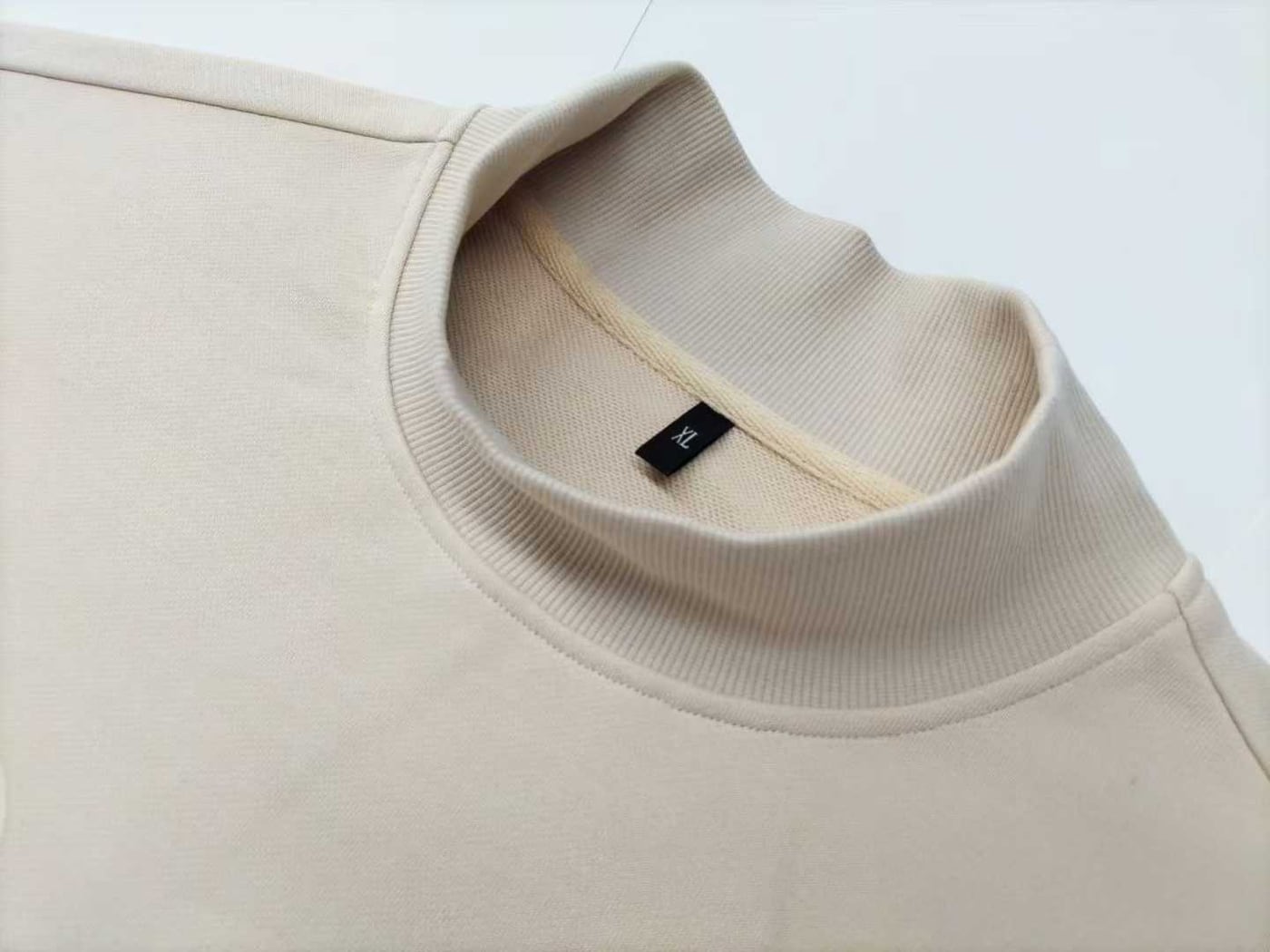
When a capsule should be treated as a replenishment
A capsule turns into a replenishment the moment a reorder is placed before the first production run has finished. At that point the style is not proven, the lot is not reserved and the fit may still move, so the second order inherits the first order’s risk without the schedule to absorb it.
The usual symptom is a buyer asking for a reorder during launch week, when sell-through has only just started. Waiting one selling period is cheaper than restocking a style whose fit is still being corrected. The case studies show how a revised specification between the first and second run changes what a factory can promise and what it cannot.
FAQ
Can a capsule style become a replenishment basic?
Yes, and most do, but it needs a conversion step: the specification frozen, the fabric lot identified and the measurement chart confirmed. A style becomes replenishable when it can be ordered without a design conversation. The knitwear manufacturing FAQ covers the questions that come up most often at that handover.
How much notice does a reorder need?
Enough for fabric confirmation and a sealed sample before bulk starts. Bulk production typically runs 20–35 days after approval, so the notice period is the fabric check plus that window, not the window alone.
Do reorders always need new samples?
Not always, but they need a seal: a garment or a set of measurements approved against the retained standard. Skipping the seal is how a reorder drifts, and the drift shows at inspection rather than at order.
What is the minimum for a reorder?
At Horssle Knit it is 300 pieces per style, the same as a first order. The difference is in what the order contains, not in the threshold, so a reorder of two sizes still meets the same per-style minimum.
Sources: OEKO-TEX Standard 100, EU Regulation 1007/2011 on textile fibre names, US CBP informed compliance, Better Work on labour compliance, Intertek textile testing, and Higg facility indexing.
Working on a knitwear project?
Let’s talk yarn, gauge and timing.
Send a reference or tech pack and we will come back with a practical development route.

