
Suppose an inspector finds more major defects than the sampling plan allows, just before a shipment is due. Start by identifying the defects and the stock affected. That tells the buyer whether to order a sort, agree a repair or reject the lot.
Last modified: November 23, 2026
A garment inspection failure rework process exists to move from that description to a decision without losing the order. It has a fixed order, a document at each step, and one rule that matters more than the rest: nothing leaves the building until a written release says it can.
Garment inspection failure rework process: the six steps
A garment inspection failure rework process has six steps: classify the defects, isolate the lot, agree a disposition, rework or sort, re-inspect against the approved sample, and release the lot in writing. Each step produces a document, and the lot does not ship until the release is signed.
The order is not a formality. Skipping the classification makes the disposition a guess; skipping the isolation lets good and bad garments mix; skipping the written release means the next person has to trust a memory of a conversation.
What the report actually says
An acceptance inspection compares the result from a sample with the plan’s acceptance and rejection criteria. The plan specifies whether to count nonconforming units or individual nonconformities. A failed sample decision applies to the submitted lot; it does not tell you that every garment is faulty. The distinction matters enormously when a buyer is deciding whether to rework, sort or reject.
Read the report in three parts. The defect classification tells you what was found and at what severity. The sample size and the acceptance number tell you how much of the lot was examined. The photographs and comments tell you where in the garment the failure sits, which is usually the fastest route to a cause.
A report that lists defects without a classification is not yet a report. Asking for the counts by class and the photographs that support them is the first practical move, and it often changes the conversation from “the lot failed” to “nine of the twelve are the same seam”.
The severity split matters more than the total. A critical defect is treated differently from a major one, and a report that adds them into a single figure hides the decision that has to be made. Ask for the table by class, with a count and a photograph for each row.
Isolate first, decide second
Isolation protects the decision. Once a lot has failed, the cartons should be marked and held, with the inspection report attached, so that no one packs them into a shipment while the discussion is open. A quarantine that exists only in an email is not a quarantine.
Mark the cartons physically and in the warehouse system, and put one person’s name on the hold. A lot that is held by a department has no owner; a lot that is held by a named person has someone to ask before anything moves.
The hold also protects the evidence. A sample that has been measured, photographed and bagged is the reference for the re-inspection, and it is far easier to re-check a lot when the failing garments are still in the condition they were found in.
The four dispositions
Every failed lot ends in one of four outcomes, and the useful work is choosing between them quickly rather than arguing about whether the lot failed.
| Disposition | When it fits | What it produces |
|---|---|---|
| Rework | The defect is correctable and the quantity is manageable | Reworked lot, re-inspection record |
| Full sort | The defect is scattered and only some pieces are affected | Sorted lot with a pass count and a reject count |
| Concession | The buyer accepts the goods at an agreed condition | Written concession with the price or quantity adjustment |
| Reject or remake | The defect cannot be corrected within the schedule | Remake instruction and a revised delivery date |

Rework: what gets fixed and what gets found
Rework is a production step with its own risk. Opening a seam, replacing a panel or re-pressing a garment can introduce a second defect, so a rework instruction should name the operation, the person responsible and the check afterwards. A rework that is not checked is a second chance for the same fault.
The other risk is scope. A sort often finds more defects than the inspection reported, because the inspection sampled and the sort examines everything. That is not evidence that the inspection was wrong; it is the difference between a sample and a census, and the sort count should be recorded separately from the inspection count.
Track the rework as a batch rather than as individual repairs. A batch with an entry date, a named operation and a check at the end has a traceable outcome; a pile of garments being quietly fixed at the end of a line has none, and it stays invisible until the next inspection finds it again.
Example: garment rectification for an open seam
Assume the inspector finds open side seams in one colour of a lounge trouser. Start the rectification record with the purchase order, affected colour and carton range. Set a hold on that identified stock and list any mixed or untraceable cartons separately. The record should say who is responsible for the hold and what evidence would justify narrowing the affected range. Keep a copy of the original report and a photograph of the open seam.
Before work starts, specify the repair and the secondary checks. For this example that means closing the seam using the approved stitch and checking that the repair has not narrowed the garment beyond tolerance, puckered the seam or left needle damage. Record the count screened, the count repaired and the count rejected as distinct fields. Move each accepted, held or rejected unit into marked stock so that the quality lead can reconcile the disposition with the warehouse count.
Make the release point explicit on the record. The reviewer must be able to tell whether the decision followed a full sort, a new sample from the submitted stock or both. An acceptance sampling plan, as described by NIST, uses a sample to decide the disposition of a lot. It is different from the factory’s screening count. File the new inspection report against the original hold and release only the carton range named in the signed decision. If the counts cannot be reconciled, keep the hold open until the discrepancy is resolved.
The re-inspection and what it must cover
The re-inspection is not a repeat of the first inspection on the same sample. It should cover the reworked units, the defect that caused the failure, and enough of the lot to confirm the fix reached production rather than one bench.
Write the scope before the re-inspection starts: which units, which points, which standard. The standard is the approved sample, not the original report, because the sample is the thing both sides already agreed on. Where the rework has changed a measurement, the graded specification decides whether the result is acceptable.
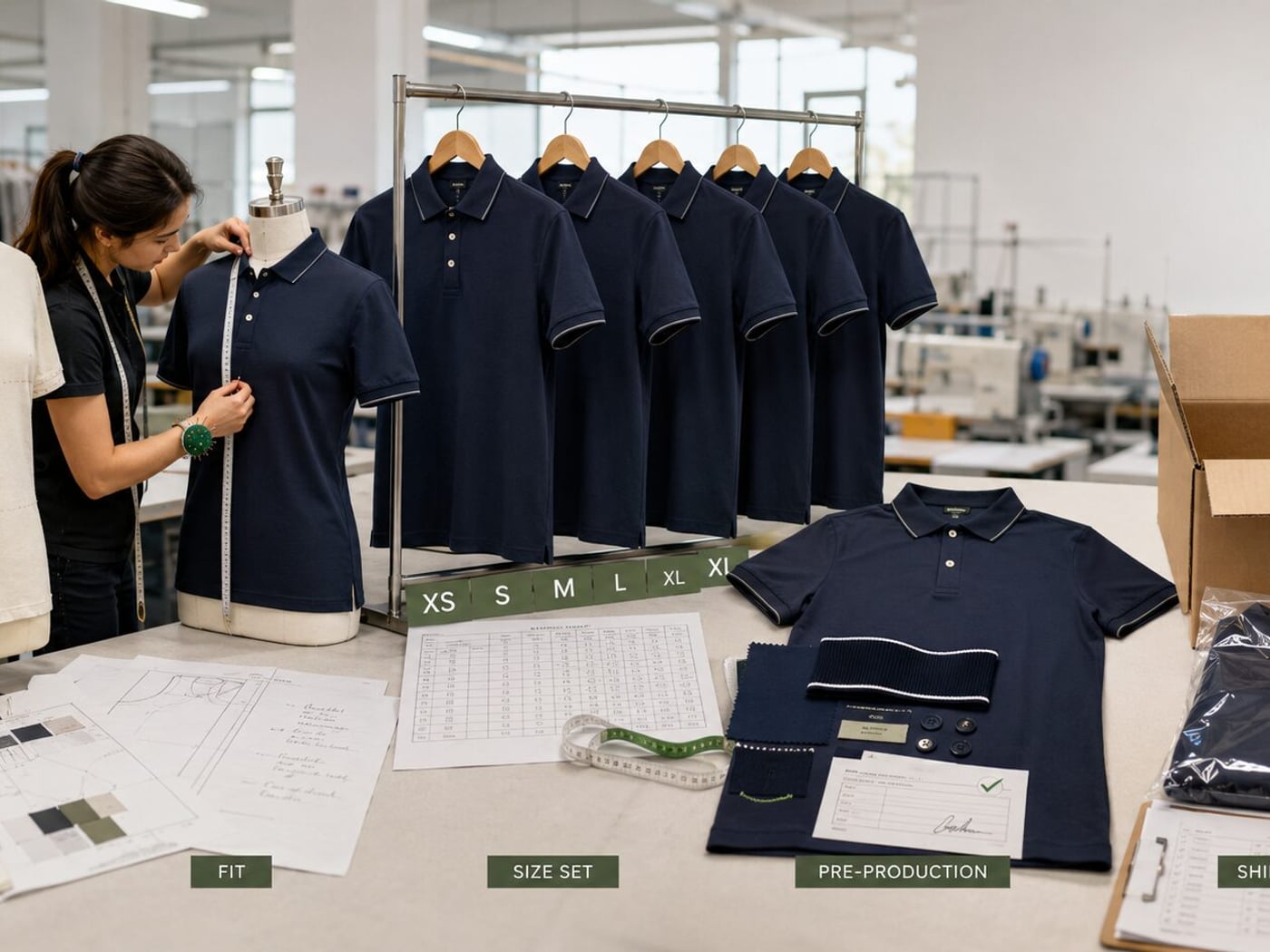
Record the re-inspection the same way as the first: sample size, defects by class, photographs, and a pass or fail line. Two reports on one page make the comparison obvious, and the comparison is what the release will refer to.
Written release, and why it matters
The release is a short document: the lot reference, the disposition, the re-inspection result, the deviations that remain and the signature that accepts them. It is the only part of the process that protects both sides after the cartons leave, because it records what was agreed at the moment the goods were passed.
Keep the release with the shipping documents rather than in the quality folder. The person who books the freight, the forwarder and the receiver all need to see that the lot was passed, and each of them needs it at a different moment in the journey.
It also prevents the quiet drift that follows a failed inspection. Without a release, a concession made verbally becomes an assumption, and the next container repeats the defect because nobody wrote down what was accepted. The quality process in the atelier runs to that rule, and the production service covers the rework step when it is needed.
Where the process breaks
Three failures account for most of the delays after a failed inspection. The first is a report without photographs, which forces a second inspection to establish what the first one saw. The second is a rework started before the disposition is agreed, which produces goods nobody has accepted. The third is a shipment booked before the release, which turns a quality decision into a freight decision.
Each has the same fix: a document at the step before. Photographs with the report, a disposition signed before rework starts, and a release signed before booking. The documents give the buyer and factory a basis for deciding where the lot can move next.
Questions about failed lots and release
Does a failed inspection mean the whole lot is bad?
No. A failure means the defects in the sample exceeded the acceptance number. A sort or a re-inspection establishes how much of the lot is actually affected.
Can we ship with a price adjustment instead of rework?
Sometimes, as a written concession that records what was accepted and on what terms. It should be a decision, not a default, and it needs the buyer’s signature rather than an email trail.
Who pays for the rework?
It depends on the cause and the contract. Establish the cause from the report and the photographs first, then agree the allocation in writing, because a rework argument held after dispatch is much harder to settle.
How long does a rework take?
It depends on the disposition and the quantity, so it is quoted per case rather than promised in advance. What can be stated is the effect on the schedule: bulk production typically runs 20–35 days after sample approval, and a rework at the end of that window compresses the remaining time.
If a lot has failed and the next step is unclear, send the inspection report and the photographs to the production team and ask for the disposition to be agreed before any carton is reopened. The questions buyers ask before sampling cover how to set the standard that the inspection will use.
Sources: Intertek on textile testing, Control Union on certification scope, Higg on environmental assessment, OEKO-TEX Standard 100 on restricted substances, and US CBP informed compliance on import documentation.
Working on a knitwear project?
Let’s talk yarn, gauge and timing.
Send a reference or tech pack and we will come back with a practical development route.


