
A kickoff meeting that ends with a list of decisions is usually one that will be held again. The meetings that hold produce something less satisfying: a list of owners, a version number and a date, with almost no decisions at all, because the decisions were already written in the documents that arrived beforehand.
An apparel production kickoff checklist is often treated as a formality, a slide deck between the sample request and the first parcel. In practice it is the last cheap moment in a project. After it, every missing owner, unclear version or undefined approval becomes a delay that costs a sampling window rather than an hour of meeting time.
An apparel production kickoff checklist that answers the hard questions
An apparel production kickoff checklist fixes five things before sampling starts: who owns the style, which version of the tech pack is live, what the approval nodes are, who signs each one, and how a problem escalates. Without those, the first sample answers a question nobody agreed to ask.
The checklist is short by design. Five items, each with a name against it, fits on one page and can be read in the meeting. A forty-line document tends to be skimmed, and the line that matters is the one that gets skimmed.
The questions the room will ask, and who answers them
On the floor, the kickoff turns on a handful of questions that come up in the same order every time. Who is responsible for the measurements? Which file is the truth? When is the sample needed, and what has to be true before it can be approved? What happens if the fabric arrives late?
Each question has an owner, and the owner is not always the person who asked it. The point of answering them aloud is that the answer becomes shared rather than held by whoever has been in the industry longest.
The most common failure is a meeting where those questions are answered informally and nobody writes the answers down. Three weeks later the factory and the brand remember different answers, and both are certain.
There is a second reason to answer them aloud. A question asked in the meeting and answered by the factory is a question the factory has agreed to be measured against. The same question sent by email two weeks later is a request, and requests get negotiated.
Who owns the style, and who signs the sample
Style ownership is the first item because it decides who the factory calls. A brand with a design lead, a product developer and a sourcing manager can produce three different answers in a week, and the factory will follow the last one it heard. Name one owner and one deputy, in writing.
Sign-off is the second. Fit, fabric, colour and pre-production each need a named signer, and the signer should be the person whose approval releases the next stage rather than the most senior person available. A signed fit sample releases the size set; a signed pre-production sample releases bulk production.
Ownership also decides who is called when a measurement is queried. A factory holding two contacts will use both, in the order that gets an answer fastest, and the answer may come from someone who does not own the consequence. One named owner removes that path entirely.

Which version is live, and where it lives
Version control is the item most often left out, and the one that wastes the most time. A kickoff should end with a single statement: this file name, this version, this date, and this is the copy the factory is working from. Everything else is history.
Put the version on the tech pack itself and in the email subject line. When a correction arrives by message, the factory should be able to see whether it applies to the live version or to one that was superseded. On a 300-piece order, a mismatch here is the difference between one sample round and two.
What approval means, and what follows it
Approval needs a definition, because “approved” can mean anything from acceptable with changes to ready for bulk. Write the meaning: an approved fit sample means the measurements and corrections are accepted and the size set can start; an approved pre-production sample means bulk can be booked against it.
The calendar follows from those definitions. Sampling runs 7–12 days after fabric and tech pack approval, and bulk production typically 20–35 days after sample approval. Those two windows are the whole schedule, so an approval that is ambiguous costs a window rather than a day.
Approval with comments is the awkward case, and the most common one. Most fit samples come back with a short correction list, so the meeting should say how those corrections travel: whether they need a remake, or whether they can move onto the size set, and who decides when the two sides disagree.
Escalation: who calls when something slips
Every project slips somewhere, and the useful question is who is called first. Agree a route: the factory’s merchandiser calls the brand’s owner, a missed fabric date triggers a call within a stated time, and a change that affects the bulk date goes to both owners rather than to whichever person answers the phone.
Write the route down with names and one alternative each. An escalation path that exists only in conversation tends to be used late, and by then the decision is about damage rather than about schedule.
A slip is easier to recover than a surprise. Tell the other side as soon as a date is at risk, even without a replacement date, and the decision becomes shared; wait until the new date is certain and the only option left is to absorb it.
The agenda, in order
The meeting works as six items, each with an owner and a document that leaves the room. Timings are indicative; the outputs are not.
| Agenda item | Question it settles | Owner | Output |
|---|---|---|---|
| Style ownership | Who decides, and who is the deputy | Brand | Two named contacts |
| Version control | Which tech pack is live | Brand and factory | File name, version and date |
| Sampling plan | What the first sample must prove | Factory | Sample type and target date |
| Approval nodes | Who signs fit, fabric and pre-production | Both | Signed approval matrix |
| Escalation | Who is called when a date slips | Both | Contact route with deputies |
| Packing and labels | What arrives with the goods | Both | Packing and label specification |
The approval matrix is the item to finish first, because it doubles as the schedule. Each node has a date, and each date depends on the one before it, so a matrix with real names converts the agenda into a plan that can be tracked weekly.
What the wearer will notice
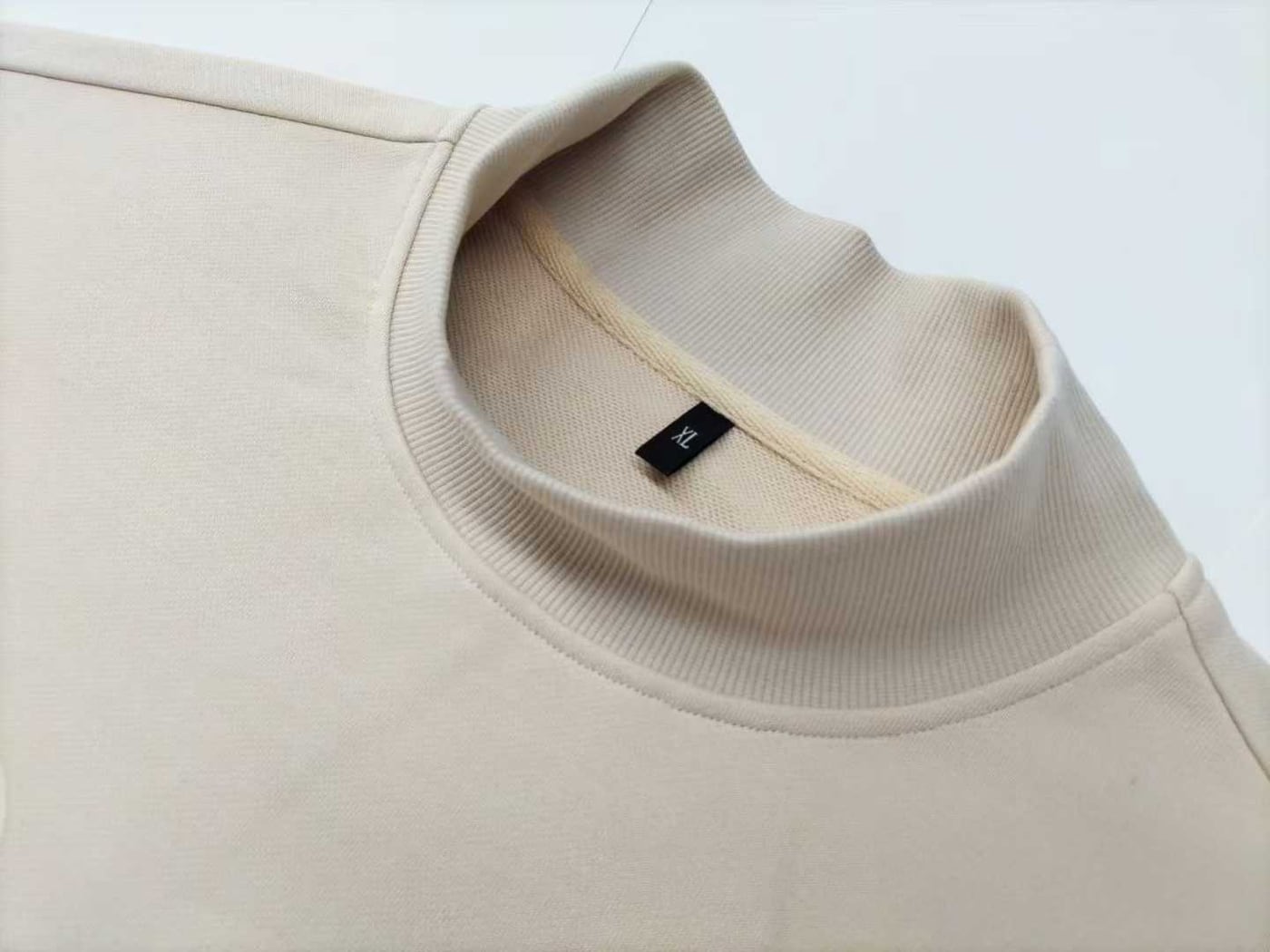
One item on the agenda is usually missing: what the person wearing the garment will feel. A neckline that sits too high, a shoulder seam that rides, a hem that twists after a wash: those are the details that decide whether a reorder happens, and none of them appear in a measurement table unless someone puts them there.
Ask the question at kickoff, while the construction is still open. Ten minutes on the wearer’s experience at the start of a project is cheaper than a fit correction after the sample, and far cheaper than a return rate that nobody can explain. The questions buyers ask before sampling cover much of the same ground from the other side of the table.
FAQ
Who should attend the kickoff?
The brand’s design or technical lead, the sourcing owner, and the factory’s merchandiser and sample-room lead. If a person can approve a stage, they should be in the room or named in the matrix.
How long should the meeting take?
An hour is enough when the documents are ready. If it runs to two, the missing item is usually a version number or an owner, and the meeting is doing work that should have happened before it started.
What if the tech pack is not finished?
Hold the sampling part and run the rest. Sampling starts 7–12 days after fabric and tech pack approval, so a kickoff that assumes an unfinished pack will be ready is planning around a date nobody controls.
Does a repeat order need a kickoff?
A shorter version: confirm the live version, the quantity, any change since the last run, and the dates. Ten minutes on a repeat order has saved more than one season from a label or colour reset.
If the agenda is the missing piece, send the brief and the current sample status to the production team through the contact form and ask for the kickoff pack before the next round.
Sources: OEKO-TEX Standard 100 on restricted substances, EU Regulation 1007/2011 on fibre names and labelling, US CBP informed compliance on import documentation, Better Work on labour compliance, and Intertek on textile testing.
Working on a knitwear project?
Let’s talk yarn, gauge and timing.
Send a reference or tech pack and we will come back with a practical development route.


