
The reorder arrived in the same box, with the same style number on the label, and the navy was a shade lighter than the first run. Nobody had changed anything on purpose. The yarn had come from a different lot, the dyehouse had matched to a recipe rather than a swatch, and the buyer’s approved sample was in a drawer two floors away from the person who signed the purchase order. An apparel reorder consistency checklist exists to stop that, and it is short.
A reorder is not a repeat of an order; it is a new production run that is supposed to reproduce an old one, which is why the checklist is a document rather than a memory. Most of the work is in proving that it did, and most of the proof sits in documents that were created during the first run and then filed.
Apparel Reorder Consistency Checklist: What Has to Match
An apparel reorder consistency checklist covers the yarn and dye lot, the fabric and its finish, the trims, the pattern and grade, the construction details and the measurements. Each item is checked against a physical reference from the first run, not against a memory of it.
The checklist is short. What makes it work is that everything on it has a sample or a sheet behind it.
The Reorder That Did Not Match
The case above is common enough to be a pattern. The first run was approved on a sample that never came back from the buyer’s office, so the second run was matched to a photograph. The photograph had been taken under warm light, and the second run was dyed to look right in that photograph.
Nothing was dishonest; the reference had simply been lost, and the factory replaced it with the nearest available substitute: an image. That is what a reorder does when the file is incomplete — it reconstructs the standard from whatever is at hand.
What Actually Changes Between Runs
| Variable | What it changes | How to check it |
|---|---|---|
| Yarn lot | Hand, slight shade, stitch behaviour | Lot number against the first run’s record |
| Dye lot | Shade and depth | New swatch against the sealed shade card |
| Fabric mill or finish | Drape, shrinkage, surface | Washed swatch against the approved one |
| Trims | Button, zip, label, thread shade | Trim card comparison, part numbers |
| Pattern or grade | Fit at every size | Measurement sheet on the first bulk |
| Line or operator | Seam allowance, topstitch, tension | Inline check on the first cartons |
| Subcontractor | Print, embroidery, washing | Named supplier and approved panel |
What the Reorder File Should Record
Before the second run starts, the file should answer five questions in writing: which yarn, which dye lot, which trims, which pattern version and which finishing route. If any answer is a version rather than a number or a date, the reorder is running on memory.
Attach the answers to the purchase order rather than to an email. A purchase order travels with the goods through cutting, making and packing; an email thread does not.
The Documents That Catch It
Four references do most of the work: the sealed sample, the measurement sheet from the first bulk, the sealed shade card and the trim cards. Each one is physical, each one is dated, and each one is useless if it lives in a different building from the person running the reorder.
The sheet is the part buyers underestimate. A measurement sheet from the first bulk records what the bulk actually measured, which is rarely identical to what the sample measured, and a reorder matched to the sample can drift by the same amount the first run drifted. Compare like with like: bulk to bulk, sample to sample.
Add the approved artwork and the finishing record, and the file is complete enough to reproduce a run without a meeting. That is the standard to aim for: a file that a new project manager could pick up and use.

Three Checks Before the Purchase Order
First, does the yarn still exist in the count and the blend? A count can be discontinued while the colour remains in the programme, and substituting the count changes the gauge and the hand.
Second, is the shade still available or does it need re-matching? If it needs re-matching, ask for a swatch on the same substrate and compare it with the sealed card in daylight before the order is placed.
Third, are the trims unchanged? A button that has been discontinued and replaced with a near match is the kind of difference that passes a visual check and fails a customer’s hand.
Checking the First Bulk
Approve the first cartons rather than the last, and approve them in the carton. A garment pulled from a sample room and a garment pulled from a packed carton can look different after a week in a box, and the difference is part of what the reorder has to reproduce. Ask for the cut panels and the first finished pieces to be compared with the sealed sample and the measurement sheet, and ask for the comparison to be photographed and dated.
Measure the first bulk flat, on the same table, with the same method, and have the measurements read by the person who approved the first run rather than by whoever is free. That person recognises a drift that a sheet alone will not show.
Measure the first bulk flat, on the same table, with the same method. A difference of a few millimetres at the chest is normal between runs; a difference that moves a whole size is a pattern or a shrinkage issue, and it will not correct itself later in the run.
Wash one piece. A reorder that matches before washing and diverges after it is a fabric or finishing difference, and the earlier it is caught the cheaper it is to fix.
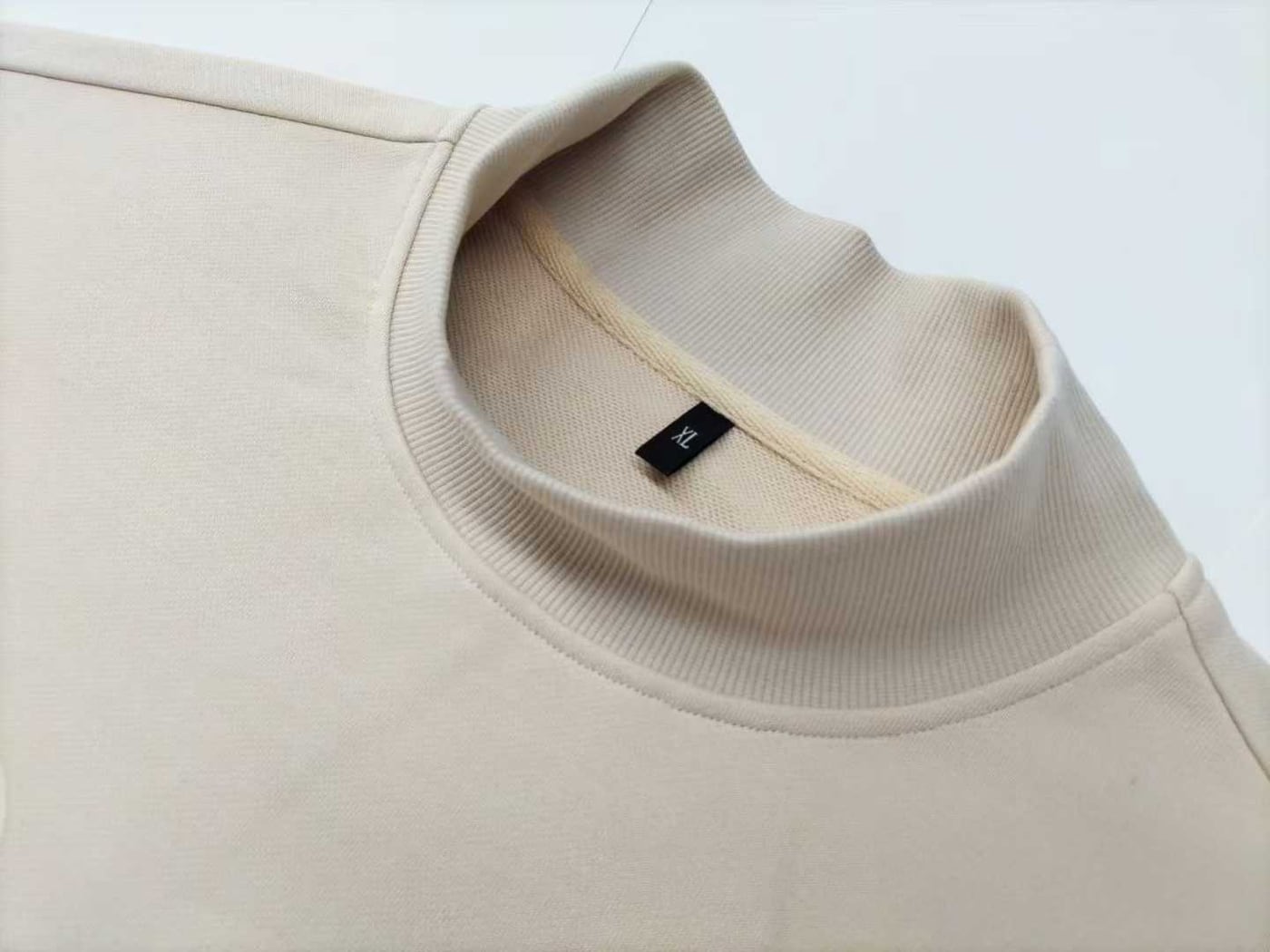
Check the trims on a finished garment, not in a box. A label sewn slightly high, a button sewn with a thinner thread or a zip with a different pull are all reorder differences that only appear once the piece is made, and they are the ones a customer notices first.
When the Difference Is Legitimate
Some variation is unavoidable and should be agreed rather than argued. A new dye lot will not be identical, and a mill may change a finish without changing the article number. What matters is that the difference is declared before the goods ship and accepted against a tolerance.
Declare it early. A mill that changes a finish should tell the buyer before the yarn is knitted, not after the cartons are packed, and the order should say so. The cost of a declared change is a conversation; the cost of an undeclared one is a return.
Write the tolerance into the order: this much shade shift is acceptable, this much length change is not. A buyer who has defined the band can accept a batch quickly; one who has not has to inspect every reorder as if it were the first.
Keeping the File Alive
Archive the first run properly: sealed sample, shade card, trim cards, measurement sheet, finishing record and the approved artwork, all dated and labelled with the style and the run. Store them together, and note where they are on the order file.
Keep a second set at the factory if the order runs through a supplier who holds the references. Two copies in two places is not duplication; it is insurance against the day the buyer’s office cannot find the bag.
Then re-check the file at every reorder rather than assuming it. Certificates expire, trims are discontinued, and the person who approved the first run may have moved on. The atelier and quality process page describes how the reference file is kept, and the sampling and production service covers the reorder review. The questions buyers ask before an order are worth re-reading before a repeat, because the answers may have changed.
FAQ
Can a factory guarantee an identical reorder?
No, and a factory that promises it is describing something the materials cannot deliver. What can be agreed is a tolerance and a set of references that make the difference measurable.
What if the approved sample was never returned?
Then the first bulk becomes the reference. Pull a piece from the first run, measure it, photograph it and seal it before the reorder starts, and treat the gap as a lesson for the next programme.
Do we need to re-approve the label on a reorder?
Only if the content, the fibre or the destination has changed. A label that is unchanged can be reused, but the file should still show which version was approved and when.
How much shade variation is normal between dye lots?
Enough to be visible side by side and not enough to notice on a shelf, in most programmes. The useful answer is the tolerance you set on a physical swatch, because that is the number both sides can test against.
Sources: OEKO-TEX Standard 100, EU Regulation 1007/2011, US CBP, Better Work, Intertek, Higg.
Working on a knitwear project?
Let’s talk yarn, gauge and timing.
Send a reference or tech pack and we will come back with a practical development route.


