
The return note said the sweater shrank. The label said wash at 30 degrees. The laboratory had tested at 40, because that was the temperature in the test standard the buyer’s own technologist had asked for, and nobody compared the two numbers before the labels were printed.
That is the shape of most care-label failures: not a false claim, but two true documents that were never read together. Garment care instruction testing is the discipline of putting them side by side before the label is ordered, and it costs a meeting rather than a recall.
Garment Care Instruction Testing: The Label Has to Match the Evidence
Garment care instruction testing means running the wash, dry and care tests the garment will actually face, then writing a care line that the results support. The fibre, the trims, the dye and the heat tolerance all set limits, and the strictest limit becomes the instruction.
The test report is evidence. The label is a promise. Neither is worth much if they describe different garments.
The Return That Started in the Label
The case is common enough to be a pattern. A knitwear programme approved a care label from the yarn supplier’s data sheet, which described the yarn rather than the garment. The sweater had a contrast trim in a different fibre, and the trim shrank at the temperature the yarn tolerated.
Nothing about the yarn test was wrong. It simply did not cover the garment, and the label inherited the gap. The fix was not a new yarn; it was a wash test on the finished piece and a care line written to the trim, not to the body.
What the Tests Actually Measure
| Test | What it supports | How it limits the care line |
|---|---|---|
| Dimensional stability | Shrinkage and growth after washing | Sets the wash temperature and drying method |
| Colourfastness to washing | Bleeding and shade change | Rules out hot washes and long cycles |
| Colourfastness to rubbing | Transfer onto light layers and upholstery | Limits claims for pale trims and dark bodies |
| Pilling and abrasion | Surface wear in use | Rules out harsh cycles and tumble drying |
| Dry-cleaning response | Solvent effect on fibre and trims | Allows or removes the dry-clean symbol |
| Appearance after washing | Seams, ribs, pressing | Decides whether the garment needs reshaping wet |
Each test answers one question, and the care line is the strictest answer among them. A sweater whose body tolerates a warm wash but whose trim does not must be labelled for the trim, because the customer washes the garment, not the panel.
Where Labels and Tests Drift Apart
The first gap is fibre against construction. Yarn data describes the yarn; a finished garment includes trims, fusibles, linings and thread, and any of them can set a lower limit than the body cloth.
The second is dye. A deep shade that passes a colourfastness test on its own can still bleed onto a pale rib when the two are washed together, and the label has to assume the customer washes the whole garment.
The third is heat. A tumble dry symbol is a promise that the garment survives tumbling, and a test run at low heat does not support a symbol that implies any dryer setting. If the test was run at low, the label says low or says line dry.
The fourth is time. A test that washes once describes one wash; a customer washes twenty times. A garment that passes a single cycle and drifts on the fifth is not caught by the standard test, which is why the sample wash in the sample room is a check rather than a substitute for the laboratory.
What a Wash Test on the Garment Looks Like
Take the finished sample, not a swatch. Measure the same points the measurement sheet uses, photograph it flat and on a body, then wash it at the temperature the label will name, with the detergent the market expects, and dry it the way the label will say.
Measure again, photograph again, and put the two sets side by side. What you are looking for is not a pass or fail but a direction: how much length moved, whether the rib recovered, whether the seams puckered, whether the colour shifted against the trim. The care line is written from those observations.
Repeat at the next temperature up if the result is close to the edge. Knowing that the garment survives one setting hotter tells you how much margin the label has, and margin is what protects a claim when a customer washes at the top of the range.
Writing the Care Line
Write the care line from the test results in the order a customer reads it: wash, dry, iron, and any warning. Keep the wording consistent with the symbols, and keep the symbols consistent with the market’s expectations, because a symbol set that contradicts the words is worse than either alone.
Ironing and drying are the two instructions most often written by habit. A wool sweater that is line dried needs a different instruction from a cotton one that tolerates a low tumble, and an iron temperature chosen for the fibre can still mark a synthetic trim. Write each instruction from the test that supports it, not from the one that was used last season.
Where a result is borderline, give the gentler instruction. A label that recommends a cooler wash than strictly necessary costs the customer nothing; a label that recommends a hotter one costs the brand the return.
What the Label Must Also Carry
Care content sits alongside other information. Fibre names and percentages follow the destination’s rules, which in the European Union means Regulation 1007/2011, and origin marking matters for the United States. Warnings for children’s wear and for particular finishes are set by the market, not by the factory.
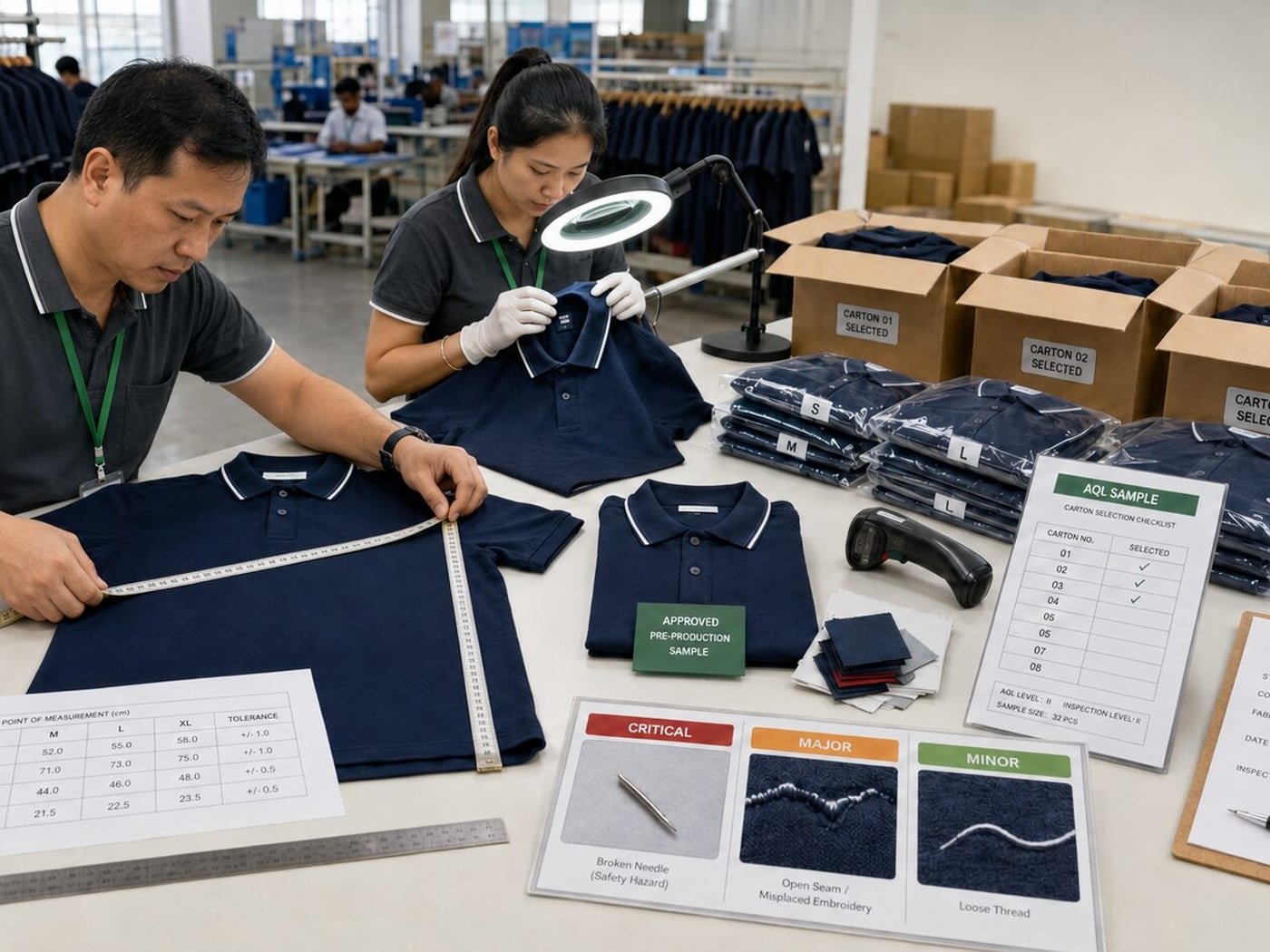
Warnings are the third element. A garment with a decorative trim that can detach, a children’s style with a cord, or a fabric with a surface finish all carry market-specific warnings, and those are set by the destination rather than by the factory. Ask your importer which apply before the labels are printed, because a warning added after the carton is packed is a rework.
If the programme uses OEKO-TEX Standard 100, GRS or RWS fibre, the certificate reference belongs in the same file as the care decision, with traceability documents where available. The claim attaches to that yarn and that certificate, and the label should not imply more than the documents support.
Re-testing After a Change
A care decision has a version, and it changes when the garment changes. A new yarn, a new trim, a new dyehouse, a different finishing route or a moved production line can each invalidate the test that supported the label, even when the style number stays the same.
Treat the label as part of change control. When any of those five changes, ask whether the existing test still describes the garment, and re-test the finished piece rather than the component. The cost of a re-test is small against the cost of a label that no longer tells the truth.
Who Owns the Decision
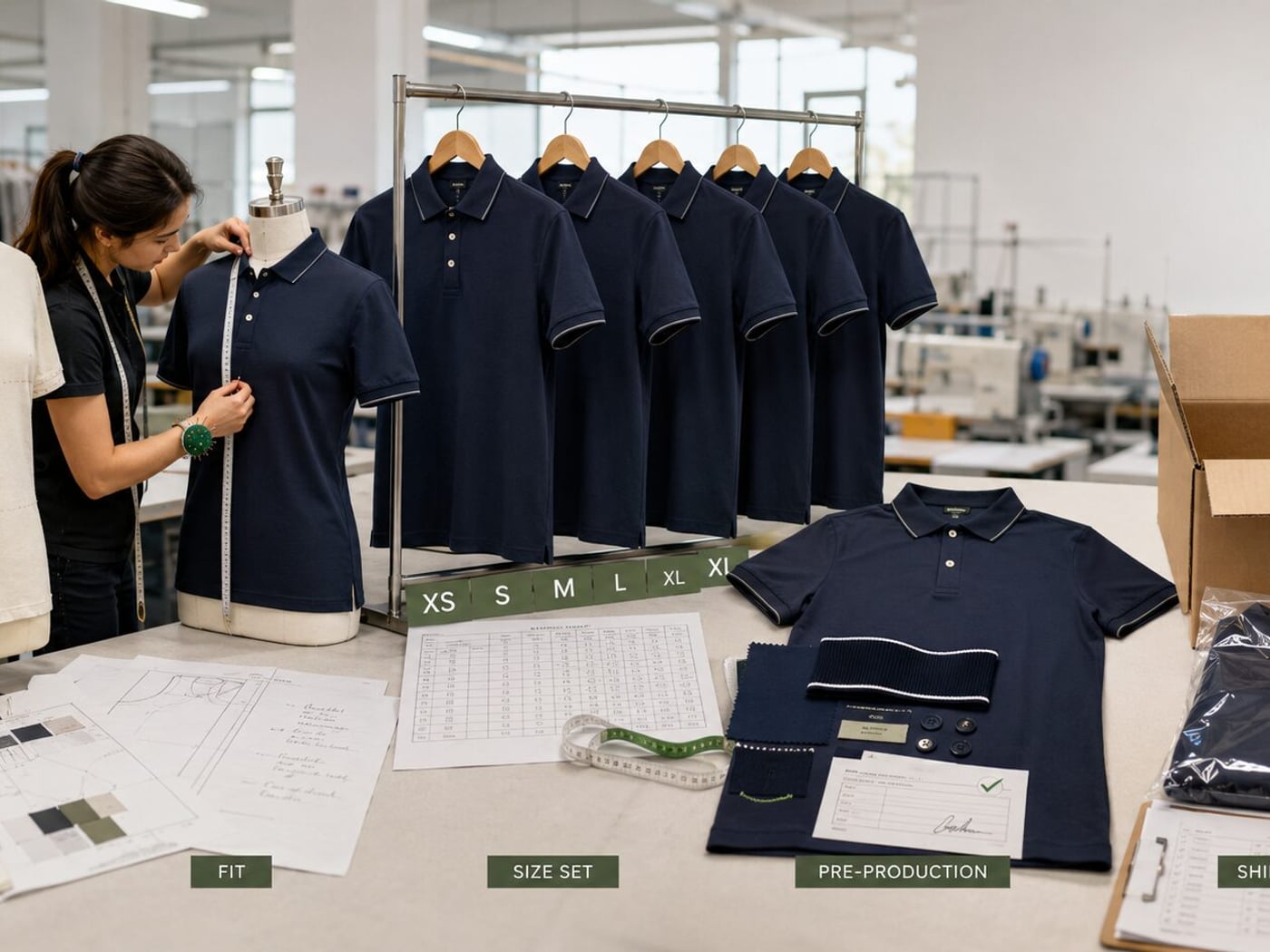
Put the care line on the same page as the measurement sheet and the finishing record. Three documents that travel together are read together; three that live in different folders are the reason a label ends up describing a garment nobody made.
The buyer owns the promise and the factory owns the process. That split means the buyer signs the care line, the factory confirms it can be met, and the test report is attached to both. A custom care label is only as good as the test behind it.
Build the review into sampling: sampling takes 7–12 days after fabric and tech pack approval, so a wash test on the finished sample fits inside that window if it is booked at the start. The atelier and quality process page describes where the test sits, and the sampling and production service covers the approval.
FAQ
Are care labels legally required?
They vary by market. The United States requires care instructions that are accurate for the garment, while in the European Union fibre composition is mandatory and care symbols are widely expected. Confirm the requirement for your destination with your importer.
Can we use the yarn supplier’s test data?
As a starting point, yes. It describes the yarn, not the finished garment, so the trims, the dye and the finishing still need a test on the piece you are selling.
What if the customer ignores the care label?
Then the claim is different. A correct label protects the brand when the garment is washed as instructed; an incorrect one removes that protection even when the customer washed it badly.
Do we need to test every colourway?
Test the extremes, at minimum the deepest shade and the palest, and any colour where the trims differ. Middle shades rarely behave differently from the extremes, but a deep red and a white are not the same test.
Sources: Intertek, Control Union, Higg, OEKO-TEX Standard 100, EU Regulation 1007/2011, US CBP.
Working on a knitwear project?
Let’s talk yarn, gauge and timing.
Send a reference or tech pack and we will come back with a practical development route.


