
A neckline that opens by a centimetre and a hem that moves by a centimetre are not the same problem. The hem changes a length decision the buyer can live with; the neckline changes how the garment sits on every wearer and how it looks on a hanger. Yet both often arrive in the same tech pack with the same plus-or-minus figure attached, because the tolerance was copied from a template rather than set for the point.
That is the whole argument for a garment measurement tolerance specification. It is not paperwork for its own sake. It is the difference between a measurement argument that ends with a number and one that ends with an opinion, and the buyer is usually the person who has to end it.
Garment Measurement Tolerance Specification: What It Has to Say
A garment measurement tolerance specification states, for each point of measure, the base measurement per size, the permitted deviation, the method used to measure it, and the rule for accepting a lot. The figures differ by point and by fabric, and a specification that applies one deviation to every point is not a specification.
Four things have to be in it before a factory can work to it: the points, the method, the per-point limits, and the acceptance rule.
Why One Number for Every Point Fails
A single tolerance forces the buyer into one of two bad positions. Set it tight enough for the neckline and the factory rejects good garments on the hem; set it loose enough for the hem and the neckline passes at a width the wearer notices immediately.
The result is predictable. Either the inspection becomes a negotiation on every lot, or the buyer stops reading the report and trusts the average, which is when a bad carton gets through. Neither outcome is a tolerance problem; both are a specification problem.
A tolerance is also a production instruction. When the cutting room knows which points are tight and which are forgiving, the marker and the spread can be planned around them. When every point carries the same figure, the cutting room plans for the average and the fit-critical points drift first.
Grade the Points by What the Wearer Feels
The practical way to set limits is to sort the points into tiers. Fit-critical points change whether the garment can be worn; visible points change whether it looks right; forgiving points change neither.
| Tier | Examples | Why the limit tightens or relaxes |
|---|---|---|
| Fit-critical | Chest, waist, hip, armhole depth | A deviation changes who can wear the size |
| Visible | Neck opening, collar height, cuff depth, hem | Read at a glance on a hanger and on a body |
| Structural | Shoulder, sleeve length, body length | Changes proportion, not fit |
| Forgiving | Pocket position, decoration placement, seam allowance | Tolerated within a visual range |
Write the tier beside each point in the tech pack. It takes ten minutes, and it tells the factory, the inspector and the buyer which numbers are fixed and which can be discussed.
Tiers are a starting point, not a standard. A children’s wear neckline and an adult’s neckline may sit in the same tier and still deserve different limits, because the wearer and the risk are different.
Fabric Changes the Number
A woven cotton poplin holds its measurement from the cutting table to the wash. A single jersey relaxes, a rib recovers, and a brushed fleece can compact at the inside after laundering. The same plus-or-minus figure applied to all three is really three different specifications pretending to be one.
The care label and the tolerance are one decision. If the label promises a warm wash and a tumble dry, the limit has to be tested under those conditions, because a garment that holds its size at 30 degrees and line drying may fail the same test in a dryer.
Two conditions have to be named in the spec: whether the measurement is taken before or after washing, and how long the garment rests before it is measured. A piece measured straight off the press will read differently from one that has rested for an hour, and neither is wrong as long as the method is the one the specification names.
Write the Measurement Method First
The method is the part buyers skip and inspectors argue about. Name the table, the tape, the points, and the condition: flat, relaxed, no stretch, measured to the nearest half centimetre with the tape touching but not compressing the surface.
Name how many pieces are measured and where they come from. Measuring one garment from the top of one carton describes that garment; measuring across cartons describes the lot. The specification should say which question the inspection is answering.
How to Word the Specification
The wording matters because it is the document both sides will point at later.
| Step | What to write | Why it is there |
|---|---|---|
| 1. List the points | Each point of measure with a code and a description | So two people measure the same place |
| 2. Fix the base | Base measurement for each size | Gives the grade something to sit on |
| 3. Set the limit | Permitted deviation per point, as a plus and minus figure | Ends the argument at the point level |
| 4. Name the method | Flat, relaxed, before or after wash, rounding rule | Makes the number repeatable |
| 5. Set the rule | How many out-of-tolerance pieces fail the lot | Turns measurements into a decision |
| 6. Record it | Attach the sheet to the purchase order | Makes it contractual rather than advisory |
What to Do When a Lot Sits Outside
The first response is to re-measure, because the commonest cause of an out-of-tolerance result is a measuring method that drifted rather than a garment that changed. Re-measure the same pieces on a flat table with a second person, and compare the two sheets before opening the discussion about the lot.
Sorting is a legitimate answer when the fault is visible and confined: pieces inside the limit are packed and the rest are held. It is not a legitimate answer for a fit-critical point, because sorting cannot make a chest measurement wider.
If the deviation is real, classify it. A fit-critical point outside the limit fails the lot; a visible point outside by a small margin may be sorted; a structural point may be acceptable if the grade still reads correctly across the size run. That classification belongs in the specification, not in the conversation after the report.

What Not to Promise
No tolerance specification guarantees a fit. It guarantees that a garment outside the agreed limits can be identified and dealt with, which is a narrower and more useful promise. Two buyers can set different limits on the same style and both be right for their market, their price point and their customer.
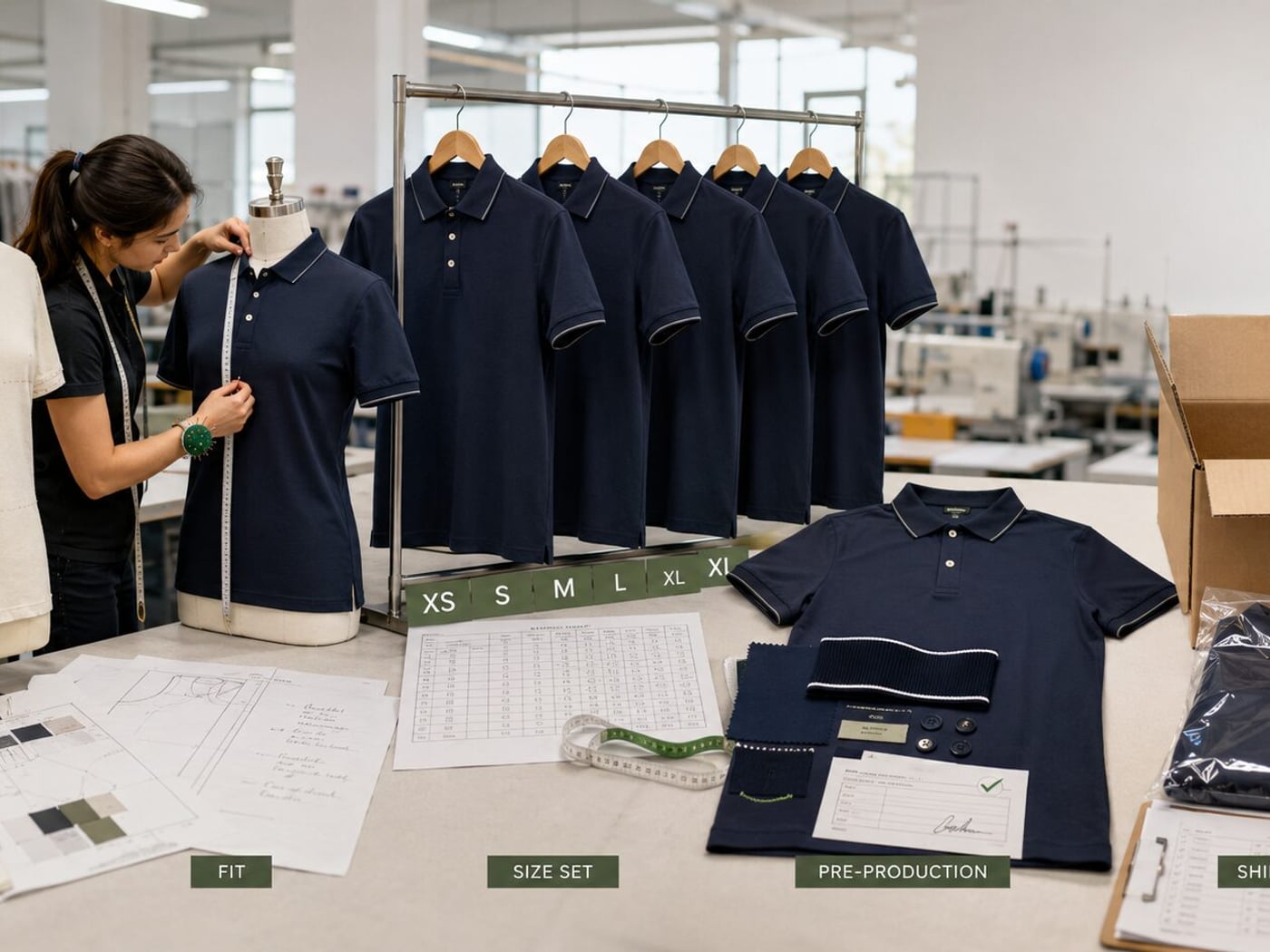
The same applies to sampling. A tolerance that a single sample passed by chance is not a tolerance the bulk can hold, which is why the sheet is confirmed on a size set rather than on one piece.
What a specification should never do is hide a fabric problem behind a generous limit. If a body cloth shrinks beyond the limit every time it is washed, the answer is a different cloth or a pre-shrunk finish, not a wider tolerance that makes the shrinkage acceptable on paper.
Where the Specification Lives
The tolerance sheet belongs in three places: the tech pack, the purchase order and the inspection file. In the tech pack it guides the sample; in the purchase order it becomes the agreed standard; in the inspection file it is the document the inspector measures against and the buyer reads afterwards.
Keep a version number and a date on the sheet. A tolerance sheet that changed in week three without a version is the commonest reason two inspection reports disagree, and the argument that follows is always about the garment rather than the document.
The atelier and quality process page describes how inspection is run, and the sampling and production service covers where the sheet is agreed. Buyers who want a second opinion on measurement method usually start with the questions buyers ask before an order, because most measurement disputes begin as unanswered questions at the quotation stage.
FAQ
Can one tolerance cover every measurement point?
It can be written, but it will not work. A neckline and a hem carry different consequences, so the limit has to differ by point, and often by fabric as well.
Should tolerance be measured before or after washing?
Both, and the sheet should say which one the acceptance rule uses. Bulk is normally measured before washing and checked against a wash test, because the customer receives a washed garment.
What happens if a supplier refuses our limits?
That is useful information. A refusal usually means the fabric, the construction or the process cannot hold the limit, and it is better to hear it at quotation than at inspection.
Do we need a tolerance sheet for sampling as well as bulk?
Yes. The sample is where the base measurements are confirmed, and a tolerance agreed after sampling is a tolerance written around a sample that already missed the brief.
Sources: Intertek, Control Union, Higg, OEKO-TEX Standard 100, EU Regulation 1007/2011, US CBP.
Working on a knitwear project?
Let’s talk yarn, gauge and timing.
Send a reference or tech pack and we will come back with a practical development route.

