
One certificate number. One PDF. One line in a supplier deck. That is often the whole evidence file behind a claim a brand prints on a hangtag in three markets.
What goes missing is the join between the number and the garment: which articles are covered, which unit holds the certificate, and which trim was never submitted. Buyers read one number as covering a whole style and meet the gap when a retailer asks for scope by article.
This is a reading task, not a research task. Here is the order to read the fields in, and three cases where one PDF is not enough.
What OEKO-TEX STANDARD 100 actually tests
STANDARD 100 tests the finished article, including fabric, yarn and trim, for harmful substances against a published criteria list. It is a product-level certification held by a company for defined articles, not a statement that a factory is chemical-free. It names what was tested, not what was never submitted.
The criteria list covers substances banned or restricted by law in the major markets, plus parameters the institute adds. That second half is why retail programmes accept the standard, and why the edition matters: the list is revised periodically, so a certificate describes the edition in force when issued.
What the test does not do is assess a process. It says nothing about effluent, working conditions or energy use.
So keep the neighbouring schemes apart. Process management at the mill is where bluesign sits, and product-level environmental scoring belongs to the Cascale Higg tools. Most programmes end up buying one alongside STANDARD 100, because each answers a different question.
Product classes and why class I matters
Every certificate is issued for a product class, and the class sets how strict the assessment was. It is the field most often skipped, and the one that decides whether your claim holds.
| Class | Articles it is meant for | What it means for a knitwear order |
|---|---|---|
| I | Babies and young children | The strictest assessment. Needed for infant knits and small-size sleepwear. |
| II | Worn close to the skin | The normal class for tees, polos and base layers. |
| III | Not worn close to the skin | Outer layers and decorative knits; weaker than class II. |
| IV | Furnishing materials | Not a garment class. |
A fabric certified at class II does not become class I because the garment is small. The class follows the article as tested, so an infant style needs class I evidence at fabric and trim level, budgeted before sampling.
Class I is also not a flammability test. It assesses harmful substances, nothing more. In the US the base standard for clothing textiles is 16 CFR 1610, and children’s sleepwear carries additional rules; check the current eCFR text.
Two questions, two documents.
The usual failure: a brand extends an adult knit into a kids’ range, keeps the certified fabric, and prints a claim only a class I certificate would support. The fabric is not at fault. The claim is.
Annex 100 vs certificate number
Two things travel on the same page, and buyers quote the wrong one.
The certificate number is an index key. It identifies the certificate, its holder and its issue, and lets you look up validity with the issuing institute. The annex is where the substance sits: the criteria and limit values the listed articles were assessed against.
When the annex and the style disagree, the annex wins. A certificate listing a brushed fleece does not cover a bonded fleece with a membrane, even where the line sheet calls both fleece. Keep the version trail, including the certificate it replaced.
Who holds the certificate: mill, garment or brand
Certification belongs to a legal entity, for articles that entity produces under its responsibility. In a knitwear chain it usually sits in one of three places.
- The yarn or fabric mill. The common case, and the strongest evidence you will get for the material itself.
- The garment maker. A knitting or sewing unit can be certified for the assembled article, provided the components are covered or themselves certified. This is the document that reaches trims.
- The brand. Possible where the brand is the legal producer. It requires holding the relationship with the institute, not being named in a deck.
A trading company in neither role cannot lend you a supply chain certificate. Ask for the mill’s certificate against the exact quality, plus the garment unit’s evidence for the assembled style.
Reading a certificate PDF in 60 seconds
Six fields carry most of the decision. Read them in this order.
| Field | What it tells you | Common problem |
|---|---|---|
| Holder name and address | Which legal entity is certified | A name that differs from your supplier |
| Product class | How strict the assessment was | Class II presented for a baby style |
| Certified articles | Which qualities are covered | A quality close to yours but not identical |
| Production sites | Where the covered articles are made | A site list that excludes your unit |
| Issue and validity | Whether the document is current | An expired PDF nobody reopened |
| Issuing institute | Who to verify with | No institute named, or a copied logo |
Verification is one request to the issuing institute, worth doing once per supplier rather than once per order. Certificates can be withdrawn, and a PDF cannot delete itself from a folder.
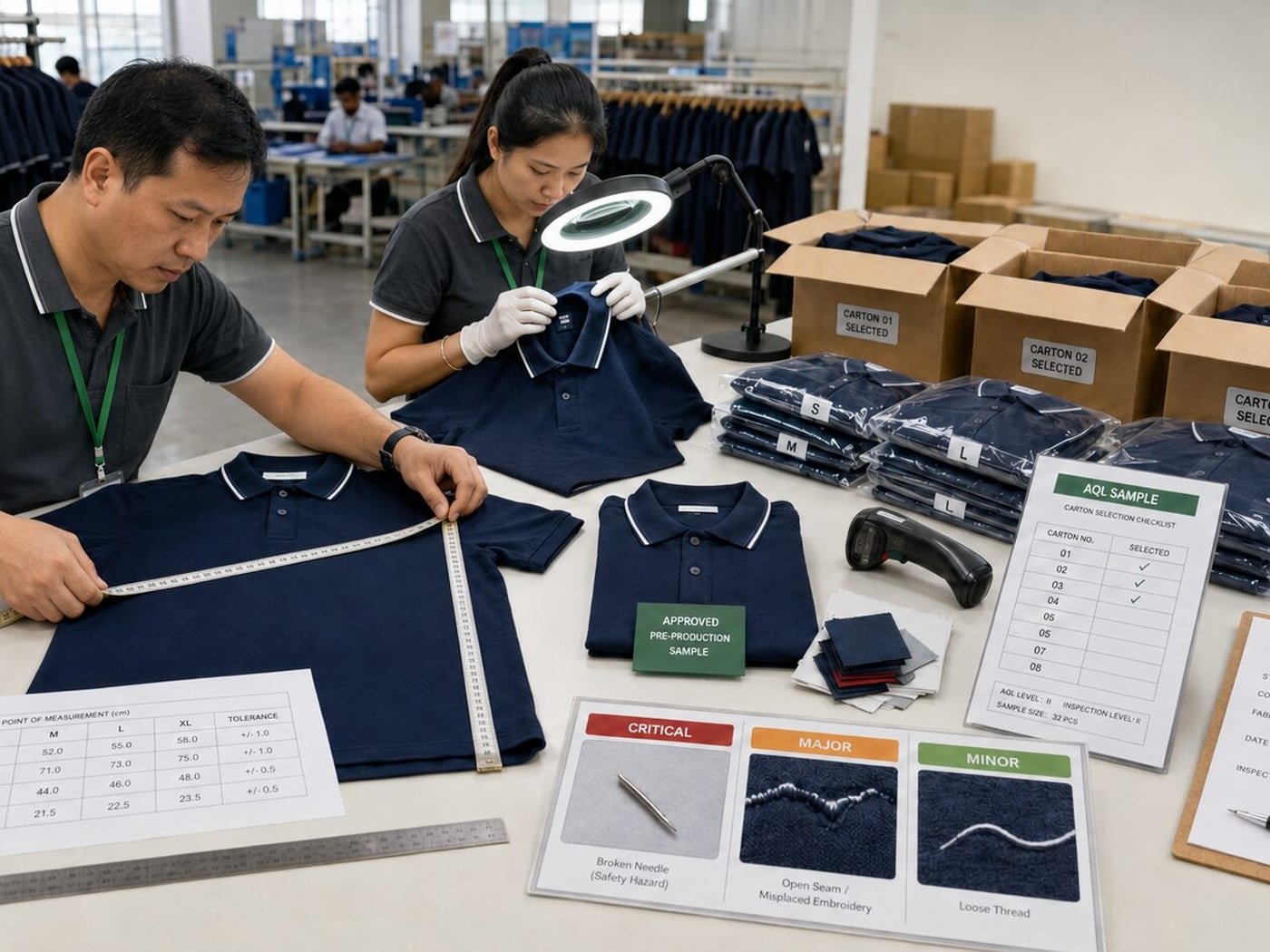
Certificate versions, expiry and withdrawal
A certificate is a dated document, and the date has to be read against your production window rather than against today.
Validity periods are printed on the certificate, and renewal is the holder’s task. What you need is the certificate in force on the day the goods were produced. Status checks are worth doing on the OEKO-TEX site or with the issuing institute, not from a PDF forwarded in a chat thread.
Ask for the version, not the newest file.
Criteria are revised on a cycle, so an older certificate describes older limits. If the order runs across a renewal date, file both the sampling and the bulk certificate.
Withdrawal is the case nobody plans for. An institute can suspend or withdraw a certificate after the fact, and the PDF stays in the supplier’s folder regardless. That is why verification belongs on a calendar entry.
Scope also follows the article as produced. Change the dyehouse or the knitting unit mid-season and the question reopens, even where the quality is unchanged.
Layering recycled and organic claims on one certificate
Fibre-content claims and product-safety claims are separate documents, and neither substitutes for the other.
| Scheme | Question it answers | What it does not tell you |
|---|---|---|
| STANDARD 100 | Was this article tested for harmful substances at the stated class? | Fibre origin, recycled content, chain of custody |
| GRS | Is the recycled content verified, with chain of custody? | Whether the finished fabric passes a substances list |
| RWS | Is the wool traceable to farms meeting welfare and land rules? | Chemistry of the dyed fabric; this is a fibre-chain standard |
| GOTS | Is the cotton organic, and was it processed through certified units? | Whether trims outside that chain are covered |
A recycled polyester fleece can hold GRS and STANDARD 100 at once. The GRS document speaks to content and chain of custody; the annex speaks to what the fabric was tested for. Programmes increasingly ask for both.
GRS and RWS are both Textile Exchange standards working through chain of custody, so what matters is a scope certificate naming products and units. GOTS works the same way and adds processing criteria. Work outside the named units sits outside the claim.
The fibre is not the certificate.
Common misclaims in supplier decks
Most misclaims are not inventions. They are true statements about a smaller object than the sentence implies.
- “OEKO-TEX certified factory.” The standard certifies articles, not factories.
- “OEKO-TEX fabric, so the garment is certified.” Trims, prints and labels were not in that scope.
- “Certified for babies” with no class I evidence in the file.
- “OEKO-TEX approved dye.” The scheme assesses articles, not dyestuffs.
- A sister factory’s certificate, presented as the supplier’s own.
Each resolves with one question about the article. The supplier who answers precisely usually has paperwork that holds; the one who sends a screenshot does not.
For substances outside the standard but inside the law, the reference is the ECHA restricted substances list, not OEKO-TEX.
When a test report is enough
Sometimes it is, and buying a certificate you do not need wastes development budget.
A report answers a point question: this colour, this lot, this date. That is adequate for a development decision or a one-off capsule. It is not adequate as an ongoing claim, because nothing requires the mill to keep making the article the same way.
A certificate implies assessment and surveillance of the holder; a report implies a lab looked at a sample. If marketing repeats the claim across seasons, the certificate survives the question of how you know. Between two qualities in week three, the report is faster.
A report issued to the mill is not transferable evidence in every programme, since retailer lists often require the holder or the brand to be named.
Writing the requirement into the purchase order
A purchase order is where a certificate requirement either becomes a condition or stays a hope.
Five things belong in the clause: the scheme by name, the product class, the article covered, the legal name of the holder, and the date the documents must arrive. The article part means quality, colour and trims in scope.
Written plainly, it reads like this. “STANDARD 100, class II, covering this fabric quality from the named mill, with certificate and annex valid at shipment, copy provided before bulk production.” Short, checkable, hard to answer with a logo.
Two clauses are worth adding. Substitution: any change of mill, dyehouse or trim supplier reopens the scope, and the supplier notifies you before producing. Lapse: if a certificate expires between order and shipment, the seller states what coverage replaces it.
Put it in the quality annex of the order, not in email, because the annex travels to the factory floor.
What we can and cannot supply
We procure STANDARD 100 certified fabrics and yarns where the nominated mill holds a current certificate for that quality, and we pass on the certificate and the traceability documents we receive.
We can also source GRS and RWS yarns on request. Where a buyer needs class I evidence for an infant range, that belongs at fabric selection, because the class decides which qualities are open at all.
We cannot issue a certificate in our own name for a fabric we did not produce, and we cannot extend a mill’s certificate to cover a trim from another supplier. Sampling runs 7 to 12 days after fabric and tech pack are confirmed, so a late document request is usually the delay.
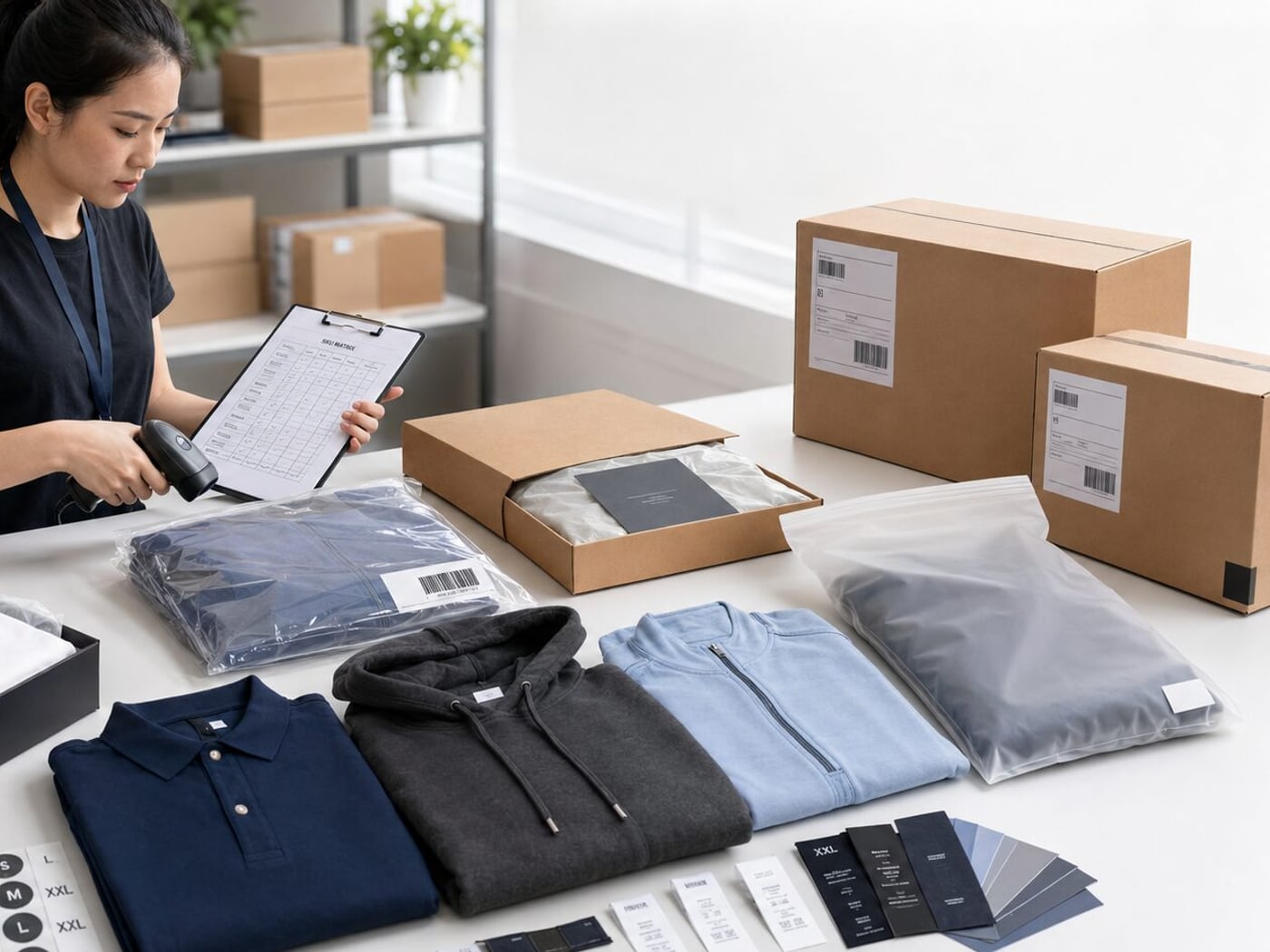
Send the target market and the product category, and our OEM, ODM and private label team will tell you what coverage the work needs. For the garment side, our private label knitwear programme holds the trim and assembly documents. The organic cotton equivalent is in the GOTS certificate chain from yarn to label.
FAQ
Does an OEKO-TEX certificate cover the whole garment?
Only the articles listed on it. Fabric, yarn and trims are separate submissions, so a certified shell fabric does not make the zipper, the print or the label covered.
Is STANDARD 100 the same as REACH compliance?
No. STANDARD 100 is a voluntary certification against a criteria list that includes legal limits plus additional parameters. REACH is legislation, and its restricted substances list is the reference for legal compliance in the EU.
How long is a certificate valid?
Certificates are issued with a validity period and are subject to renewal. Check the issuing institute’s own validity lookup, because a PDF in a supplier folder can be out of date without anyone noticing.
Can a certificate be transferred to our brand?
No. Certification belongs to the entity that holds it, for the articles it submitted. A brand can obtain its own certification, but it does not inherit the mill’s certificate by buying fabric.
Do we need class I for a children’s style?
If the style is aimed at babies and young children, class I is the class that supports the claim. Adult-certified fabric does not become class I because the garment is made in a smaller size.
Working on a knitwear project?
Let’s talk yarn, gauge and timing.
Send a reference or tech pack and we will come back with a practical development route.

